
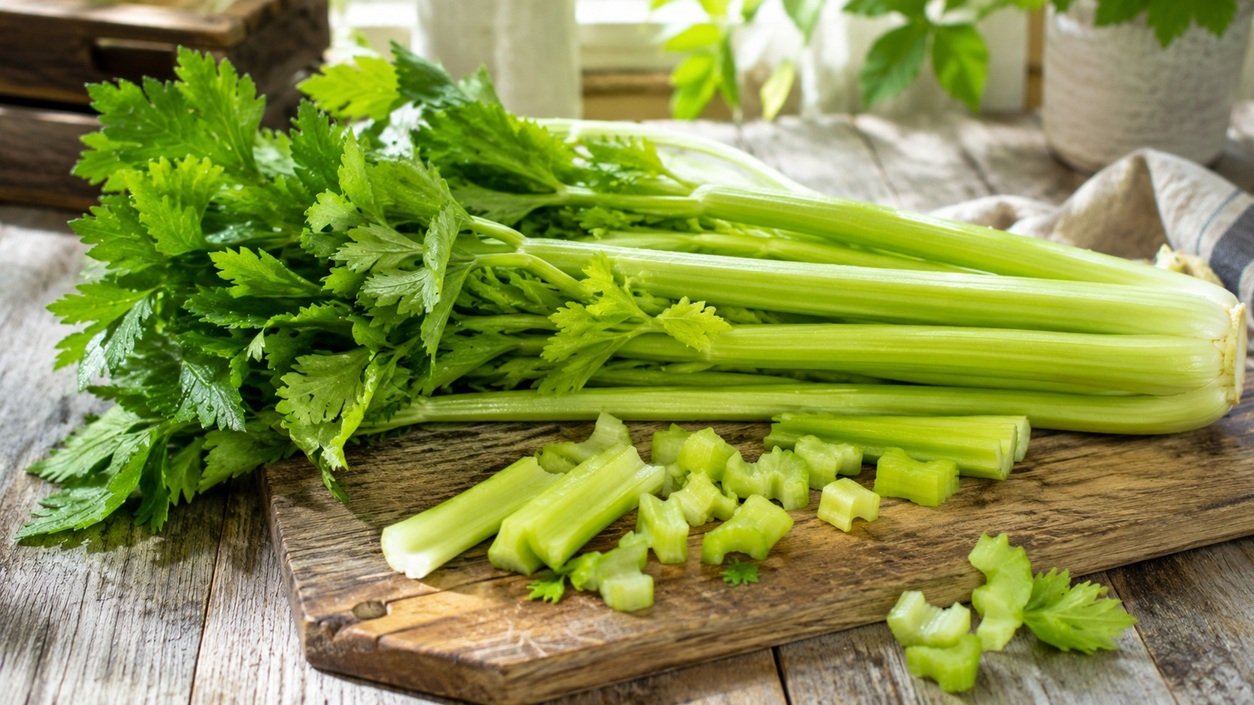
Celery rarely gets the spotlight. It is usually the vegetable sitting quietly beside carrots on a snack plate, chopped into soup, or added to a salad almost as an afterthought. Yet the health benefits of celery make this humble vegetable more interesting than its reputation suggests. Celery provides water, fiber, vitamins, minerals, and naturally occurring plant compounds while being relatively low in calories. That combination makes it a useful addition to an overall balanced eating pattern, even though it is not a miracle food.
The smartest way to look at the health benefits of celery is to think about the entire diet rather than one ingredient. Eating celery will not magically detox your body, cure disease, or replace medical treatment. What it can do is contribute useful nutrients to meals and snacks, particularly when you eat the whole vegetable rather than relying on highly processed foods. That distinction matters because nutrition is rarely about finding one magical ingredient; it is more like building a house, with each nutritious food contributing another useful piece.
Why Celery Deserves More Attention
One reason the health benefits of celery are sometimes misunderstood is that celery is mostly water. People occasionally interpret that as meaning it has little nutritional value. In reality, water content is one of its useful characteristics, particularly when celery is eaten as part of meals or snacks. It also contributes dietary fiber and small amounts of several micronutrients, including vitamin K, folate, potassium, and vitamin C. The amounts you receive depend on portion size and the rest of your diet, so celery should be viewed as one contributor rather than a standalone nutritional powerhouse.
What Makes Celery Nutritionally Interesting?
The real appeal of the health benefits of celery comes from its combination of hydration, fiber, micronutrients, and phytochemicals. Celery contains naturally occurring compounds such as apigenin and luteolin, which researchers have investigated for their biological activity. Laboratory and preliminary research can be interesting, but it should not be confused with proof that eating celery prevents or treats a particular disease. Human health outcomes are much more complicated than what happens to an isolated compound in a laboratory.
Celery is also remarkably versatile. You can eat it raw with a dip, add it to soups and stews, mix it into salads, or combine it with other vegetables in cooked dishes. That flexibility matters because the best healthy food is often the one you will actually eat consistently. Rather than chasing an exotic superfood, adding ordinary vegetables such as celery to meals can be a practical step toward a more varied diet.
Health Benefits of Celery for Everyday Nutrition

Among the most practical health benefits of celery is its ability to add volume, crunch, and nutrients to meals without contributing a large amount of energy. This can make it useful when you want snacks and meals that feel substantial without depending heavily on highly processed ingredients. Celery also works particularly well with foods that provide protein and healthy fats. Pairing celery with hummus, yogurt-based dips, nut or seed butters, beans, eggs, or a balanced meal can create a more satisfying eating experience than treating celery as a complete snack by itself.
The health benefits of celery also fit naturally into a broader vegetable-rich eating pattern. Instead of asking whether celery is healthier than every other vegetable, a better question is whether it helps you eat a greater variety of minimally processed plant foods. Broccoli, tomatoes, peppers, leafy greens, carrots, onions, beans, fruits, whole grains, nuts, and seeds all bring different nutrients and compounds to the table. Celery can be one part of that bigger picture.
Celery, Hydration, and Fluid Intake
Hydration is another reason people discuss the Health Benefits of Celery: What This Crunchy Vegetable Can Really Do for You. Because celery contains a high proportion of water, eating it contributes some fluid along with food. However, celery should not be presented as a replacement for drinking water. Your body regulates hydration through several systems, and your overall fluid intake comes from beverages as well as foods.
This is where celery's reputation can become exaggerated. Claims that celery somehow "hydrates the body better than water" are not supported by good evidence. Water remains a straightforward and effective way to meet fluid needs for most people. Celery simply happens to be a water-rich food that can complement normal hydration habits.
Celery and Digestive Health
The digestive side of the health benefits of celery deserves more attention because celery contributes dietary fiber. Fiber is important for normal bowel function and is associated with several aspects of digestive and metabolic health. Unlike many nutrients that are absorbed quickly, fiber passes through the digestive tract in ways that influence stool bulk, intestinal movement, and the environment in the gut.
Eating celery as part of a varied diet can therefore contribute to overall fiber intake. Still, celery is not exceptionally high in fiber compared with foods such as beans, lentils, whole grains, seeds, or some fruits and vegetables. If someone suddenly eats a large quantity of any fibrous food, they may experience digestive discomfort. Gradually increasing fiber and drinking enough fluids can be more comfortable for many people.
The Role of Fiber in Celery
One of the useful health benefits of celery is that its fiber can help make meals more filling and support regular digestion. Fiber also interacts with gut bacteria, although the exact effects depend on the type and amount of fiber consumed and the individual's overall diet. This is another reason nutrition experts generally emphasize dietary patterns instead of promoting one food as a solution to every digestive problem.
If you want to increase fiber, think beyond celery. A balanced approach includes vegetables, fruits, legumes, whole grains, nuts, and seeds. Celery can contribute to that total while adding texture and flavor to meals.
Health Benefits of Celery for Heart Health
Research surrounding the health benefits of celery and cardiovascular health has generated plenty of online interest, particularly because celery contains potassium and various plant compounds. Potassium is an essential mineral involved in fluid balance, nerve signaling, and muscle function. Adequate potassium intake from food is also associated with healthy blood pressure in the context of an appropriate overall diet.
Celery can contribute some potassium, but it would be misleading to call celery a treatment for hypertension or heart disease. Cardiovascular health depends on numerous factors, including overall dietary quality, physical activity, sleep, genetics, smoking status, stress, and medical conditions. A vegetable can support a healthy dietary pattern without being a medical treatment.
Celery and Blood Pressure
Some of the strongest claims about the health benefits of celery involve blood pressure. Celery contains compounds that have been studied for potential effects on vascular function, but evidence from laboratory or animal research does not automatically mean that eating celery produces a clinically meaningful blood-pressure reduction in humans.
If you have high blood pressure, celery can certainly be part of a heart-conscious eating pattern, but it should not replace medication or professional medical advice. A diet rich in vegetables and fruits, moderate in sodium, and appropriate in overall calories can support cardiovascular health. Celery fits comfortably into that approach, especially when it replaces salty, heavily processed snack foods.
Celery’s Antioxidants and Plant Compounds
Another interesting category of the health benefits of celery comes from its naturally occurring phytochemicals. Plants produce thousands of compounds that help them respond to environmental challenges, and some of these compounds interact with biological processes in humans. Celery contains flavonoids and other phytochemicals that have attracted scientific interest.
However, "contains antioxidants" should not be translated into "prevents disease." Human health is influenced by complicated interactions between genetics, lifestyle, diet, and environment. Eating a range of colorful vegetables is a more sensible strategy than focusing on a single antioxidant-rich food.
Why Antioxidants Matter
The potential health benefits of celery from plant compounds are best understood as part of dietary variety. Different plants contain different phytochemicals, and eating a broad selection gives your diet a wider nutritional range. That is one reason a colorful plate is more useful than obsessing over one supposed superfood.
Celery's pale green color does not mean it is nutritionally irrelevant. At the same time, it does not make celery superior to darker green vegetables. Spinach, kale, broccoli, peppers, tomatoes, berries, citrus fruits, and legumes all bring their own nutritional profiles. Variety is the real advantage.
Can Celery Support a Healthy Weight?
People often mention the health benefits of celery when discussing weight management because celery is relatively low in calories and provides crunch and volume. Adding vegetables to meals can make it easier to build satisfying portions while keeping overall energy intake appropriate. Celery can be particularly useful as a replacement for snacks that are primarily refined carbohydrates, added sugars, or excess sodium.
But eating celery alone is not a healthy weight-management strategy. Your body needs adequate energy and nutrients, especially during adolescence and periods of growth. Healthy eating should focus on nourishment rather than severe restriction or trying to survive on very low-calorie foods.
Celery as a Low-Calorie Food
The health benefits of celery in this context come from what celery adds to a meal, not from excluding other foods. For example, chopped celery can add texture to a sandwich, soup, grain bowl, or salad. When paired with protein, whole grains, healthy fats, and other vegetables, it becomes part of a balanced meal rather than a substitute for one.
That distinction is important because healthy eating is not a contest to see how little food you can eat. The goal is to give your body the nutrients and energy it needs while developing sustainable eating habits.
Health Benefits of Celery for Blood Sugar Management
The health benefits of celery may also be relevant to people interested in blood-sugar-friendly meals because celery contains relatively little carbohydrate and contributes fiber. Including non-starchy vegetables in meals is commonly encouraged as part of balanced eating patterns. Still, celery alone should not be described as a food that "lowers blood sugar" or treats diabetes.
Blood glucose responses depend on the complete meal, portion sizes, activity, medications when applicable, and individual physiology. Someone managing diabetes should follow advice from their healthcare team rather than attempting to control blood glucose with celery juice or another single food.
Celery and Inflammation
The possible anti-inflammatory properties associated with the health benefits of celery are largely connected to its phytochemicals and findings from laboratory research. Scientists have studied compounds in celery for their interactions with biological pathways involved in inflammation. Those findings are scientifically interesting, but they do not establish celery as a treatment for inflammatory diseases.
A better takeaway is that vegetables are generally valuable components of a balanced dietary pattern. If your meals regularly contain a mixture of vegetables, fruits, whole grains, legumes, nuts, and other minimally processed foods, you are building a dietary foundation that supports overall health.
Celery Juice vs. Whole Celery
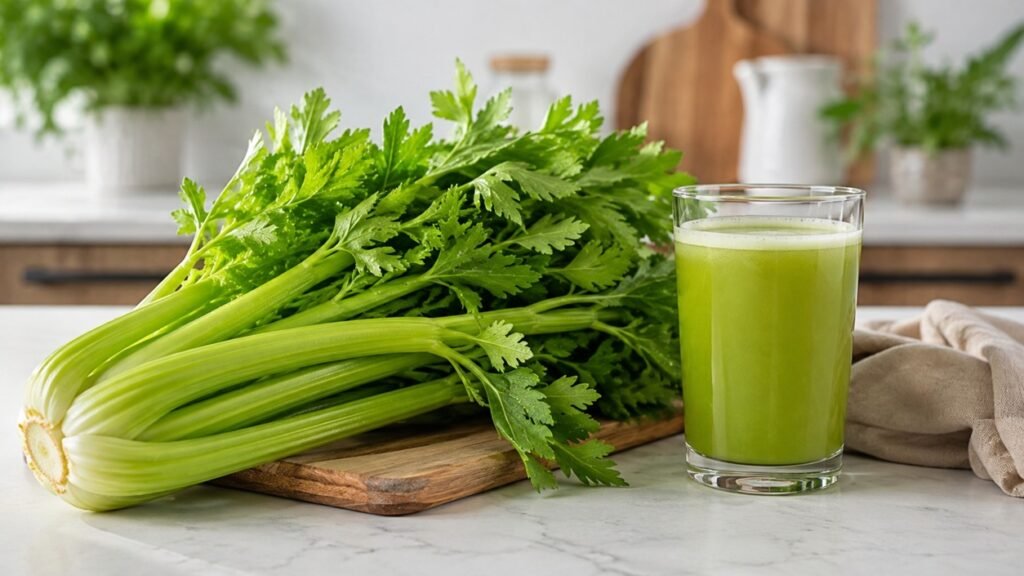
When discussing the health benefits of celery, it is important to separate whole celery from celery juice. Juicing can make it easier to consume a concentrated amount of celery, but it removes or reduces some of the fiber found in the intact vegetable. Whole celery also takes longer to chew and can provide more physical texture and satiety.
Celery juice is not a detox treatment, and there is no good reason to believe that drinking it "flushes toxins" from the body. Your liver, kidneys, lungs, and digestive system already perform the body's normal waste-processing functions. If you enjoy celery juice, it can be a beverage choice, but it should not replace a varied diet.
Which Option Is More Nutritious?
For most people, whole celery is the more useful choice when the goal is to maximize the health benefits of celery as a vegetable. Keeping the vegetable intact preserves its natural structure and fiber. You can also combine whole celery with other nutrient-rich foods, making it easier to build a balanced snack or meal.
Juice can still have a place in a varied diet, but it should not be treated as nutritionally superior simply because it looks like a concentrated health drink.
How Much Celery Should You Eat?
There is no universal amount required to obtain the health benefits of celery. Dietary needs differ according to age, activity, overall diet, health conditions, and individual preferences. Instead of chasing a specific celery quota, aim for a varied selection of vegetables and other nutritious foods throughout the day.
If celery is new to your diet, introduce it gradually if you are not accustomed to much fiber. Wash fresh celery thoroughly, and combine it with foods that provide nutrients celery lacks, such as protein, whole grains, healthy fats, fruits, and other vegetables.
Easy Ways to Add Celery to Your Diet

One of the underrated health benefits of celery is simply how easy it is to use. You do not need an elaborate recipe. Slice it into salads, chop it into soups, add it to a sandwich, mix it with a bean or chickpea salad, or serve it with a balanced dip.
For a quick snack, celery can be paired with hummus, plain yogurt-based dip, or nut or seed butter, depending on your dietary needs and allergies. Adding celery to meals can also make familiar dishes more interesting without requiring complicated cooking techniques.
Who Should Be Careful With Celery?
The health benefits of celery do not mean celery is appropriate for absolutely everyone. Celery can trigger allergic reactions in some people, and celery allergy may sometimes occur alongside sensitivities to certain pollens or other foods. Anyone who already knows they have a celery allergy should avoid it and follow their healthcare professional's advice.
Celery can also be relatively high in sodium compared with some other fresh vegetables, although the amount in a normal serving is not equivalent to heavily salted processed foods. People following medically prescribed diets should consider their entire dietary pattern rather than making decisions based on a single ingredient.
Common Myths About Celery
The internet has transformed the health benefits of celery into a collection of impressive-sounding claims, but several deserve a reality check. Celery does not detox the body, melt fat, cure chronic disease, or automatically lower blood pressure. Celery juice is not a replacement for medical treatment, and consuming more celery does not necessarily mean receiving proportionally greater health benefits.
The more realistic story is actually more useful: celery is a water-rich vegetable containing fiber, micronutrients, and plant compounds that can contribute to a balanced eating pattern. That may sound less dramatic than a miracle-food claim, but it is far more consistent with how nutrition actually works.
How to Choose and Store Fresh Celery
To preserve the practical health benefits of celery, choose stalks that look fresh and firm rather than limp or severely discolored. The leaves should appear reasonably vibrant, and the stalks should not have obvious signs of spoilage. Once home, refrigeration can help maintain quality.
Keep celery clean and dry until you are ready to use it, and wash it thoroughly under running water before eating. If you cut vegetables in advance, store them appropriately in the refrigerator and use sensible food-safety practices.
Health Benefits of Celery: The Practical Takeaway
The health benefits of celery are real, but they are much more ordinary—and much more useful—than many social-media claims suggest. Celery can contribute water, fiber, potassium, vitamin K, folate, vitamin C, and various plant compounds to your diet. It can add crunch and volume to meals while working particularly well with protein-rich and nutrient-dense foods.
The biggest lesson is not to turn celery into another food obsession. Instead, use it as one piece of a varied dietary pattern. Eat a mixture of vegetables, fruits, whole grains, legumes, nuts, seeds, and suitable protein sources, and let celery earn its place through convenience, taste, and nutrition.
Frequently Asked Questions
Is celery actually healthy?
Yes. Celery is a nutritious vegetable that provides water, fiber, and several vitamins, minerals, and plant compounds. Its value is greatest when it is included as part of a varied diet rather than treated as a miracle food.
What are the main health benefits of celery?
The most practical health benefits of celery include contributing to vegetable and fiber intake, adding water-rich foods to the diet, and supplying nutrients such as vitamin K and potassium. Celery also contains naturally occurring phytochemicals that researchers continue to study.
Is celery juice healthier than eating celery?
Not necessarily. Whole celery retains its natural fiber and provides texture that juice does not. Celery juice can be consumed as part of a varied diet, but it should not be considered a detox treatment or a substitute for whole vegetables.
Can celery lower blood pressure?
Celery contains potassium and plant compounds that have generated research interest, but eating celery should not be considered a proven treatment for high blood pressure. Anyone with hypertension should follow an appropriate medical and dietary plan recommended by qualified healthcare professionals.
Can I eat celery every day?
For most people who tolerate it, celery can be included regularly as part of a varied diet. There is no requirement to eat it every day, however. Variety is more important than relying heavily on one vegetable.


0 Comments